I. Laboratory Introduction
Located in Room 507, Building 5, Yangtze University, this laboratory is affiliated with the Central Laboratory of the School of Mechanical Engineering, Yangtze University (Digital Simulation Computing Center). Its main functions are: relying on the graphics workstation cluster and the Altair HyperWorks series of digital simulation software platforms, to carry out digital simulation teaching and research in structural strength, modal analysis, fatigue durability, multi-body dynamics, topology optimization and lightweight design, enabling students to master modern digital simulation technologies such as finite element modeling, solving, post-processing and structural optimization, and providing computing and simulation support for course teaching, course design, graduation projects and research in majors such as Mechanical Engineering and Material Forming and Control Engineering.
II. Instruments and Equipment
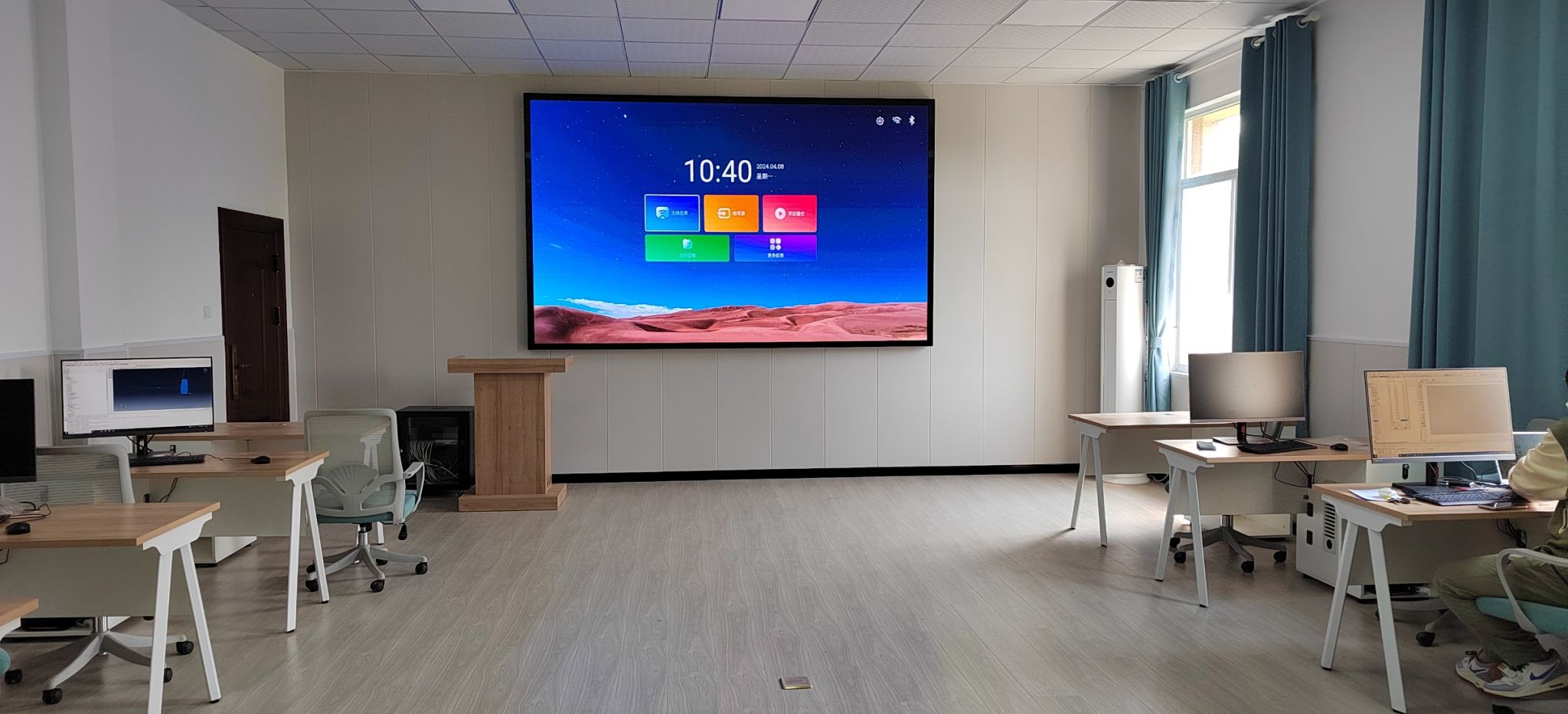
Digital Simulation Laboratory
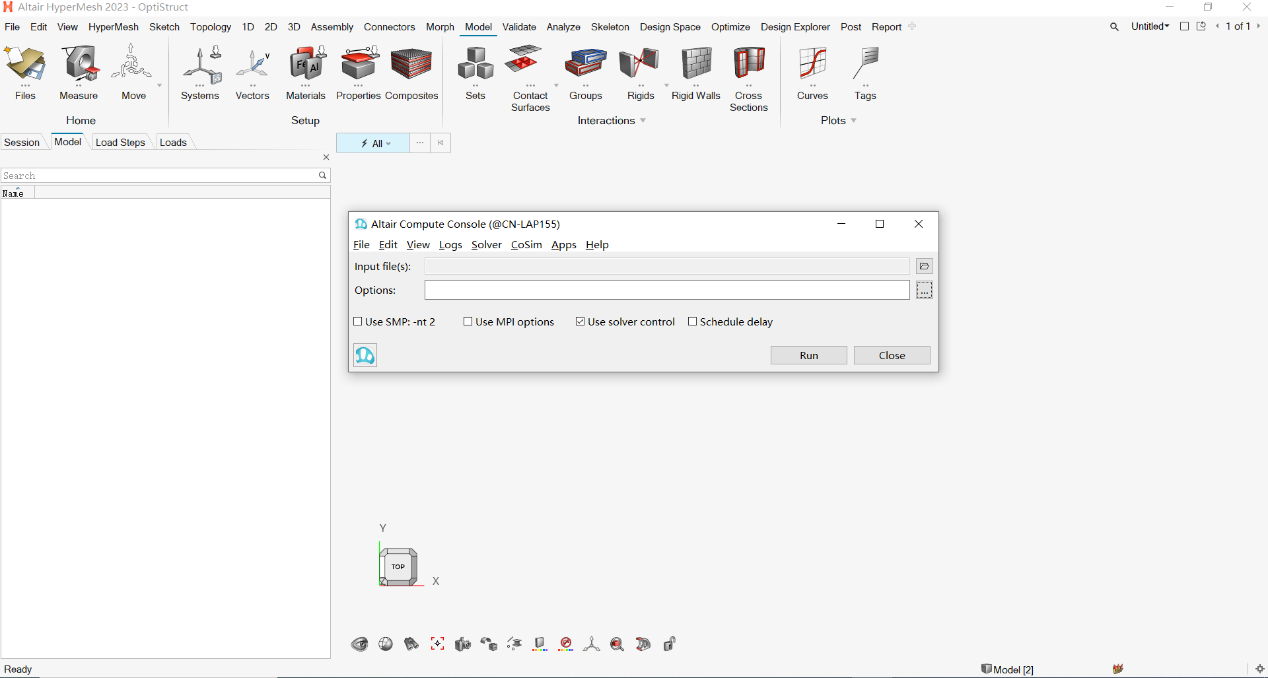
Pre-processing Software
Software (Model): Pre-processing software (Altair HyperMesh 2023)
Brand: Altair (Altair Engineering Software (Shanghai) Co., Ltd.)
Analysis and Solver Software
Software (Model): Analysis and solver software (Altair OptiStruct 2023)
Brand: Altair (Altair Engineering Software (Shanghai) Co., Ltd.)
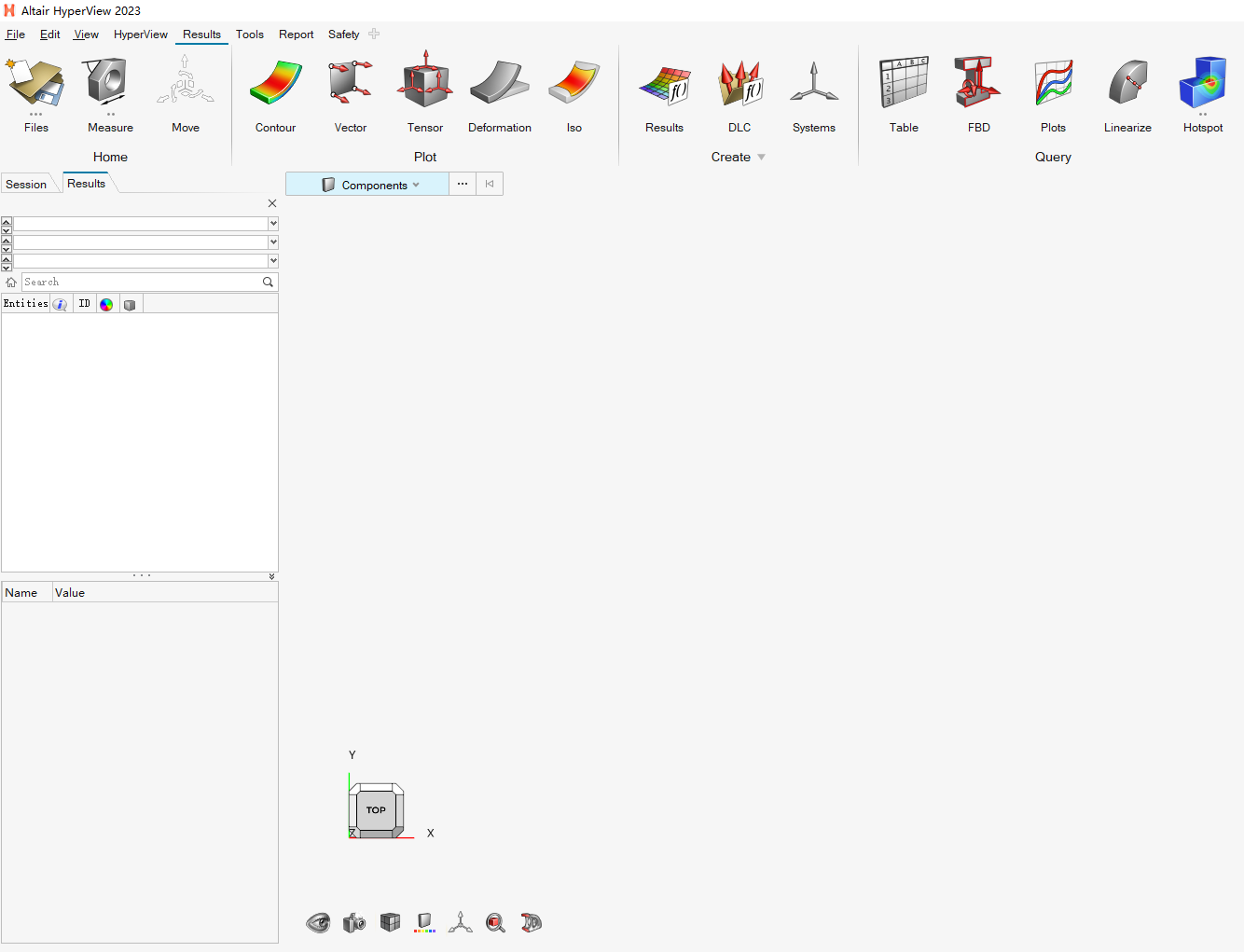
Post-processing Software
Software (Model): Post-processing software (Altair HyperView 2023)
Brand: Altair (Altair Engineering Software (Shanghai) Co., Ltd.)
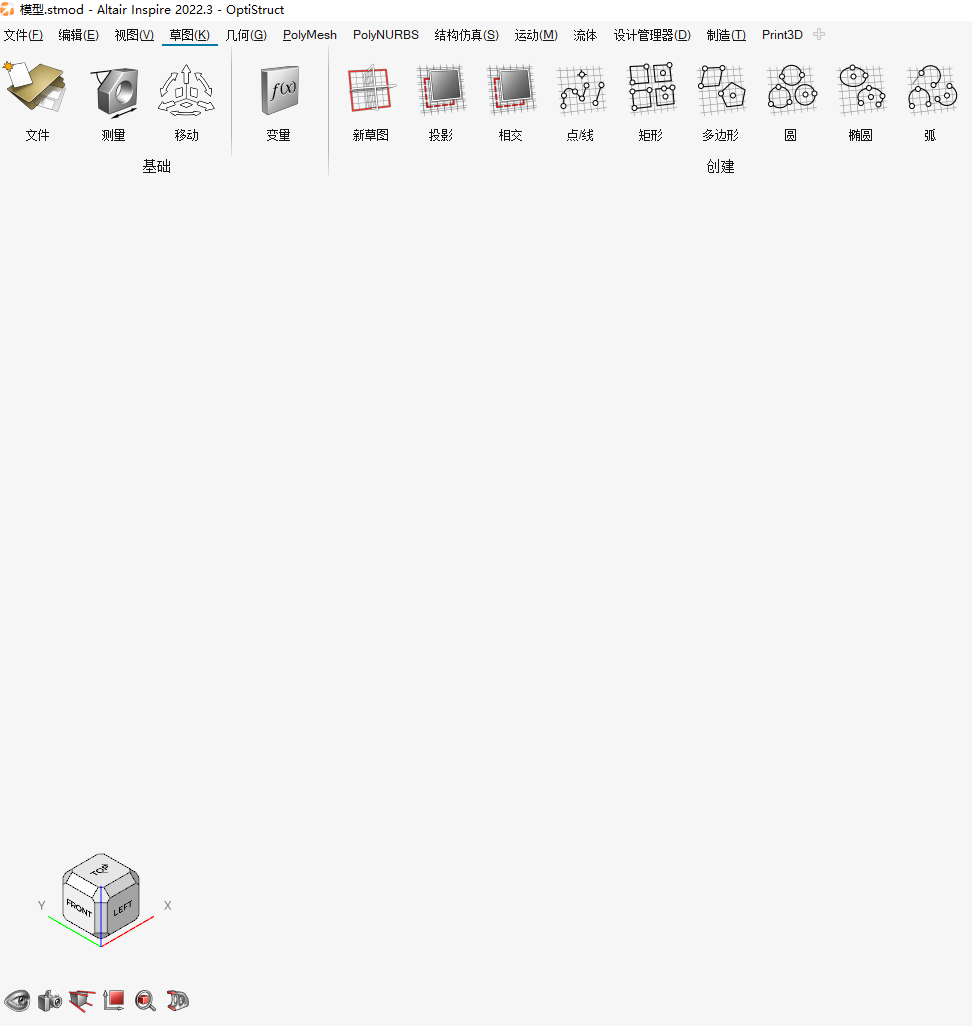
Topology Optimization/Lightweight Design Software
Software (Model): Topology optimization/lightweight design software (Altair Inspire 2023)
Brand: Altair (Altair Engineering Software (Shanghai) Co., Ltd.)
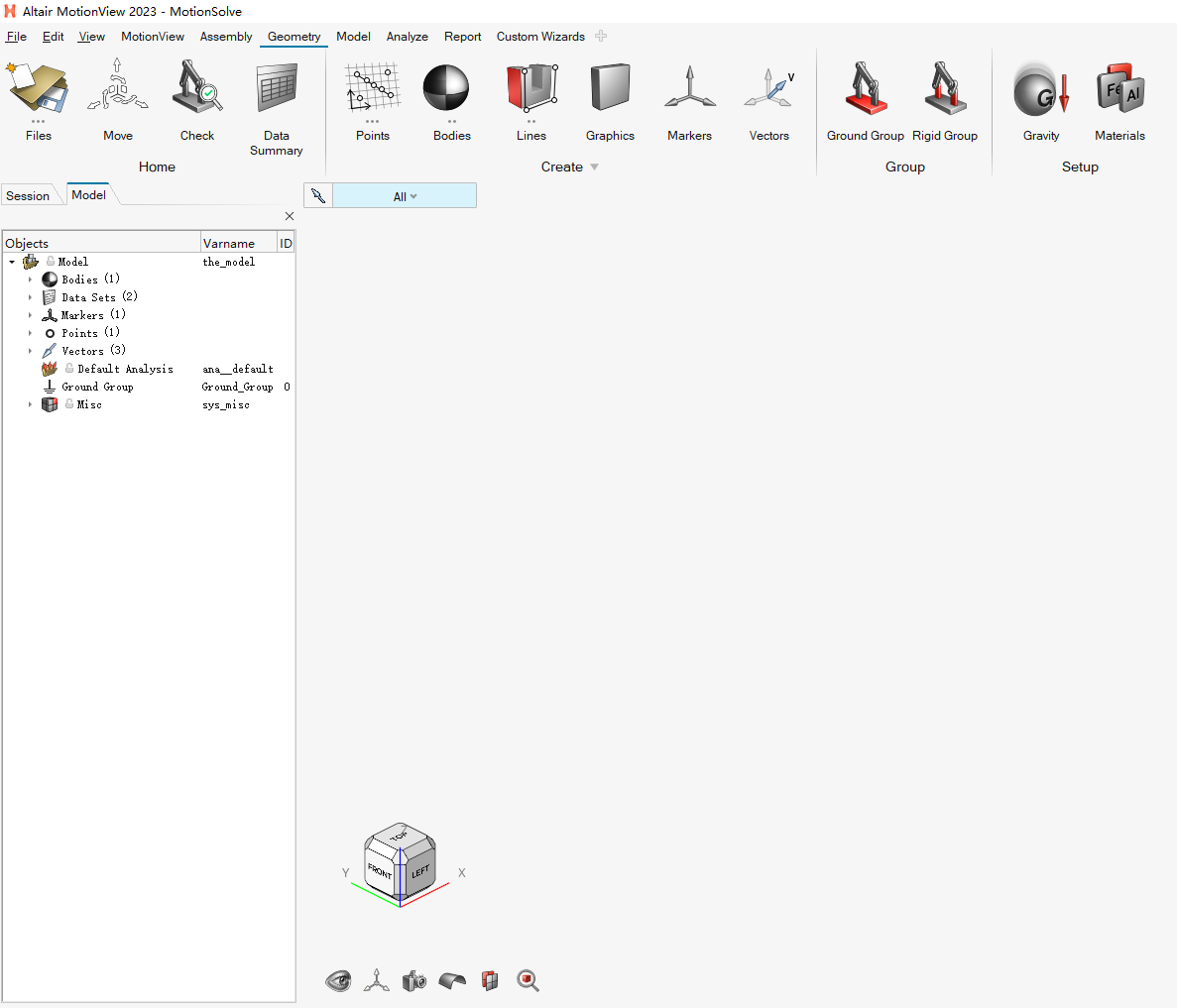
Multi-body Dynamics Software
Software (Model): Multi-body dynamics software (Altair MotionSolve 2023)
Brand: Altair (Altair Engineering Software (Shanghai) Co., Ltd.)
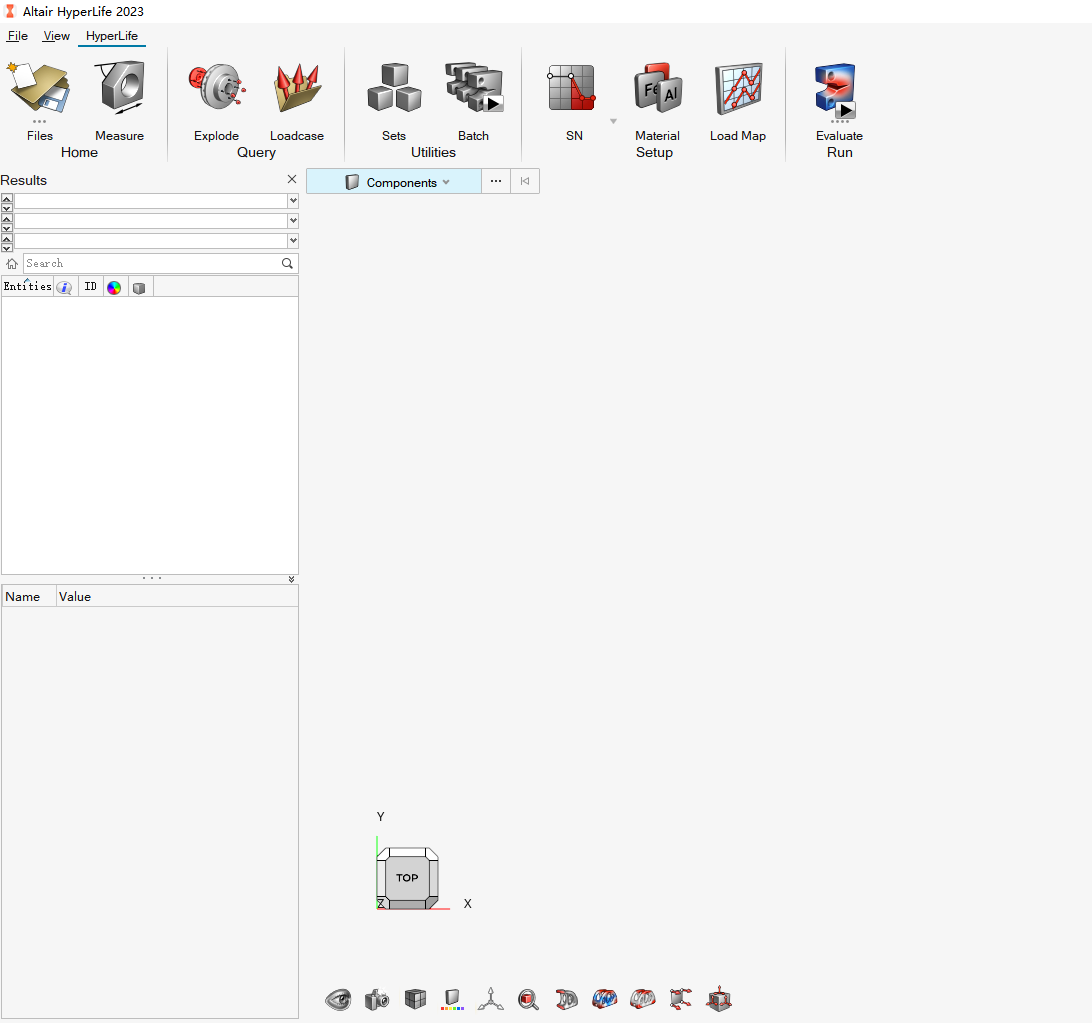
Fatigue and Durability Analysis Software
Software (Model): Fatigue and durability analysis software (Altair HyperLife 2023)
Brand: Altair (Altair Engineering Software (Shanghai) Co., Ltd.)
III. Main Parameters
This laboratory is equipped with 5 Lenovo graphics workstations, 1 H3C S-1626 multi-function switch, and 10 sets each (2023 version) of professional simulation software of the Altair series for pre-processing, analysis and solving, post-processing, topology optimization, multi-body dynamics, and fatigue and durability analysis, covering the complete digital simulation process from CAD modeling, meshing and solution analysis to result post-processing and structural optimization.
(I) Graphics Workstation (Lenovo, customized):
1. Processor: Intel Xeon Gold 5218R × 2;
2. Memory: 4 × 32 GB DDR;
3. Storage: 1 TB high-speed SSD + 2 × 4 TB SATA HDD;
4. Graphics card: 24 GB professional graphics card;
5. Network port: Gigabit RJ45;
6. Expansion slots: total number of PCI-E I/O slots ≥ 3;
7. Power supply: 1400 W;
8. Monitor: ≥ 27-inch monitor.
(II) Multi-function Switch (H3C S-1626):
1. Switching capacity: ≥ 8.8 Gbps;
2. Packet forwarding rate: ≥ 6.5 Mpps;
3. Application level: Layer 2;
4. Table entries: MAC address table ≥ 8K;
5. Ports: 24 10/100BASE-T auto-negotiating Ethernet ports;
6. Network standards: IEEE 802.3, IEEE 802.3u, IEEE 802.3ab, IEEE 802.3z, IEEE 802.3x;
7. VLAN: supports up to 512 VLANs conforming to the IEEE 802.1q standard and up to 24 port-based VLANs.
(III) Pre-processing Software (Altair HyperMesh 2023):
1. CAD interfaces: comprehensive CAD software interfaces directly support Catia, UG, Pro/E, Parasolid, IGES, STEP, STL, PDGS, VDAFS, DXF, ACIS, JT, Tribon and other mainstream 3D CAD model files and general data formats worldwide; model reading is fast and accurate;
2. CAE interfaces: support mainstream finite element software such as Nastran, OptiStruct, Ansys, LS-DYNA, HyperXtrude, HyperForm, HyperLife, Radioss, MotionSolve, Madymo, Permas, Samcef, Actran and PamCrash; boundary conditions can be applied to complete finite element modeling and generate solver input files;
3. CFD interfaces: data can be exchanged with mainstream CFD software such as Fluent, CFD++, SC/Tetra, StarCD and AcuSolve;
4. Operation recording and scripting: the command code of each operation is automatically recorded; script files can be generated to repeat operations or for secondary development;
5. Video-based help: a video icon appears when a function button is activated, allowing real-time viewing of the video description of the function;
6. AI-based feature matching: quickly finds symmetrical and reusable parts in the model and groups them automatically; supports quick synchronization to other parts after editing;
7. Geometry clean-up and repair: rich automatic and manual geometry clean-up and repair functions, capable of handling gaps, overlaps, misaligned surfaces or missing surfaces; Boolean operations between solids are supported;
8. Mid-surface extraction and editing: can memorize mid-surface thickness information; mid-surface extraction, mesh generation and thickness assignment can be completed in one click;
9. Mid-surface mesh generation: can directly generate 2D meshes at mid-surface positions without extracting mid-surfaces, and automatically generates associated 1D plotel elements;
10. Mesh deformation: parameters and features of existing mesh models can be changed without returning to CAD software, and mesh models of new designs can be generated directly; shape optimization technology based on mesh deformation results is supported;
11. Skeleton modeling: supports quickly creating beam and shell elements based on finite element meshes, geometry or topology optimization results to build the overall product framework;
12. 1D/2D mesh creation: rich library of standard beam sections; supports equilateral triangle, right triangle, quadrilateral and all-quadrilateral meshes;
13. Mesh rebuilding: rebuilds existing meshes without relying on geometry; features such as fillets and round holes can be identified and re-edited;
14. Tetrahedral meshes: supports generating tetrahedral meshes directly by selecting geometric solids or closed surface groups, with layer count control in the thickness direction;
15. Hexahedral meshes: excellent hexahedral meshing capability; supports mesh deformation technology, geometry-free hexahedral generation, automatic meshing of thin solids and Shrink Wrap meshing technology;
16. Mesh smoothing and optimization: supports smoothing and optimization of tetrahedral and hexahedral meshes, improving mesh quality through multiple iterations;
17. Mesh imprinting and extension: supports mesh imprinting, node extension matching, mesh-based hole drilling and patching, and batch filling of holes/gaps/notches on meshes;
18. Mesh Boolean operations: performs Boolean operations on intersecting meshes with automatic remeshing to achieve mesh merging;
19. Feature copy and pattern: directly copies and patterns features such as ribs, grooves, holes and bosses on meshes; original meshes are automatically replaced and nodes shared;
20. FUSE merging: merges intersecting, gapped or overlapping meshes into one whole, quickly generating closed surface meshes;
21. Mesh refinement: supports mesh refinement of specific objects such as selected points, lines and surfaces, or virtual refinement regions;
22. Mesh from point clouds: supports automatically building topology and creating surface meshes from point clouds or scanned data points;
23. Composite material modeling: supports three composite modeling methods - PCOMP, PCOMPG and PCOMPP (Stack+Ply), with 3D display of plies;
24. Batch meshing: supports multi-core parallel batch meshing, fully non-interactive, with automatic queuing, automatic quality index control and automatic generation of quality reports;
25. Model assembly management: realizes multi-level model management and multi-file management, with cross-referencing and query functions for parts, materials and properties; supports searching objects by name, type and ID;
26. CFD pre-processing module: supports rapid wind-tunnel meshing (near-field unstructured mesh with boundary layer + far-field structured mesh); supports SPH and FPM meshing algorithms;
27. Model management: completes arbitrary assembly at assembly, subsystem and part levels in the same interface; supports storing meshes of multiple disciplines in one part;
28. Design exploration: supports setting up DOE and optimization directly in the pre-processing interface and calling the solver for analysis; supports machine-learning-based displacement contour prediction.
(IV) Analysis and Solver Software (Altair OptiStruct 2023):
1. Linear static and dynamic analysis: static analysis (stiffness, strength, inertia relief, buckling analysis), modal analysis (real modes, complex modes, prestressed modes), steady-state/transient dynamics (frequency response analysis, transient response analysis, random vibration analysis, response spectrum analysis), acoustic and vibro-acoustic coupled analysis, substructure technology (CMS superelements, CDS superelements, PART superelements), NVH analysis and squeak and rattle analysis;
2. Nonlinear analysis: material nonlinearity (metals, plastics, rubber, gaskets, rate-dependent plasticity, temperature-dependent hyperelasticity, Marlow hyperelasticity, foams and other materials), geometric nonlinearity, and contact nonlinearity (point-to-surface, surface-to-surface and self-contact; bonding, small sliding, large sliding and continuous sliding are supported);
3. Encrypted format cards: supports encryption of material information, dynamic load inputs, etc. in the model;
4. Modal solution: supports the Block Lanczos method and the AMSES modal acceleration algorithm based on the automatic multi-level substructure method; normal modes, prestressed modes, complex modes, wet modes and other modal analyses can be performed;
5. NVH analysis: real and complex modal analysis, direct and modal superposition frequency response analysis, random response analysis, response spectrum analysis, transient response analysis, rotor dynamics analysis, fluid-structure coupled vibration and noise analysis, automatic multi-level substructure method (AMSES), one-step transfer path analysis, acoustic radiation analysis, etc.;
6. Submodel analysis: supports the "global first, then local" submodel analysis approach, automatically mapping boundary conditions of the global coarse mesh model to the local detailed mesh model;
7. Dynamic liquid penetration pressure load analysis, electrical analysis and electro-thermal coupled analysis: supports electro-thermal coupling and further thermal-structural coupling on this basis, realizing stress and strain analysis of electrically conductive structures;
8. Thermal analysis: steady-state heat transfer (linear and nonlinear), transient heat transfer, contact-based heat transfer analysis, thermal-structural coupling and thermal-fluid-structure interaction (TFSI) analysis; heat transfer, thermal radiation and heat conduction of 1D, 2D and 3D elements are supported;
9. Darcy flow heat transfer analysis: simulates heat transfer and temperature field analysis with the combined action of structural heat conduction and fluid mass transfer between nodes; topology optimization based on this type of problem is supported;
10. One-step linear transient thermal-structural coupled analysis: first calculates the transient temperature field of the model, then maps it to the entire structure with mechanical loads superimposed, outputting temperature field and stress results at all time increment steps;
11. Composite material analysis: supports composite definition formats such as PCOMP, PCOMPG and PLY+STACK; solves stress, strain and failure factors of each ply; supports optimization of ply shape, layer count, angle, thickness and sequence, as well as multiscale analysis;
12. Multiphysics analysis: supports structural static/dynamic analysis, fatigue analysis, steady-state thermal-structural coupling (two-way strong coupling), transient thermal-structural coupling, acoustic-structure coupled analysis, multi-rigid-body dynamics, etc.; multiphysics coupled simulation with fluid, discrete element and electromagnetic field solvers is available; CFD analysis, fluid-structure interaction (FSI) and thermal-fluid-structure interaction (TFSI) analyses can be performed.
(V) Post-processing Software (Altair HyperView 2023):
1. Result reading: capable of reading various types of CAE result files from Ansys, Nastran, Abaqus, LS-DYNA, Adams, Radioss, OptiStruct, MotionSolve, Madymo, Permas, Samcef, Actran, PamCrash, etc.;
2. Integrated sessions: can be integrated in the same session, facilitating synchronous viewing and comparison of models and analysis results;
3. Multi-window display: the same page supports simultaneous multi-window display of models, contours, animations, videos, curves, text, tables, etc.;
4. Result types: capable of processing stress/strain contours, vector plots, iso-value plots, tensor plots, deformation plots, arrow plots, exploded views, section cuts, CFD streamline plots, model annotations, model measurements, deformation animations, linear animations, modal animations, transient animations, multi-body dynamics (rigid-flexible hybrid) animations, etc.; supports overlay comparison of test videos and simulation animations;
5. Multiple result display: supports displaying multiple results on one page; a session can contain multiple pages, enabling overlay of multiple CAE models and structures;
6. Result output: various analysis results can be output as text, images, video animations, etc.; all pages in a session can also be output directly as PPT for convenient editing into reports.
(VI) Topology Optimization/Lightweight Design Software (Altair Inspire 2023):
1. Multi-language support including a Chinese version; no manual meshing is required - the software automatically generates meshes in the background;
2. CAD import and modeling: can import mainstream CAD models and also provides certain modeling capabilities;
3. Optimization setup: allows setting multiple optimization constraints and one optimization objective according to engineering practice; supports optimization load cases of analysis types such as stiffness, strength, modal, inertia relief and buckling;
4. Optimization functions: provides topology optimization, topography optimization, gauge (thickness) optimization and other functions; lattice optimization can be further carried out based on topology optimization results, and the optimization results can be directly connected to 3D printing;
5. Motion simulation and optimization: can perform motion simulation and topology optimization of parts in multi-body motion;
6. Design exploration: supports DOE with factor screening on parametric variables; algorithms such as ARSM and GRSM can be used to find the optimal design in the design space;
7. CAD file formats: supports importing mainstream CAD file formats such as ACIS, Catia, Creo, IGES, Inventor, JT, Parasolid, SolidWorks, STEP, STL and UG NX; supports exporting intermediate geometry file formats such as IGES, Parasolid, STEP and STL;
8. Modeling capability: can perform geometric creation and simplification of models, including creating, modifying and simplifying solid feature models, sketching tools, creating geometric solids by extruding planes or cylindrical surfaces and modifying dimensions, Boolean operations, and geometric simplifications such as removing imprints, fillets, arcs and round holes;
9. Optimization space definition: can directly define optimization and non-optimization spaces on CAD models, and apply various constraints, concentrated forces, pressures, torques, manufacturing constraints, etc. according to actual working conditions;
10. Optimization analysis: can perform optimization analysis based on load cases such as strength and stiffness, frequency, modal, buckling and thermal stress, and provides post-processing results such as displacement, safety factor, yield, percentages of tension and compression, von Mises stress and maximum principal stress;
11. Multi-objective optimization: can carry out multi-objective, multi-load-case and multi-constraint optimization, obtaining multiple optimal structural schemes while simultaneously satisfying multiple optimization objectives such as stiffness, strength, displacement, first natural frequency and weight;
12. Optimization solving: supports topology optimization of 1D, 2D and 3D elements; supports topology optimization using the variable density method and the level set method;
13. Advanced geometry reconstruction: can directly use the PolyNURBS polygonal modeling function in the software to wrap and fit rough optimization results into part structures with smooth surfaces that are easy to manufacture, and export high-quality geometric models in STEP, xt, IGS and other formats;
14. Material library: comes with material parameters of commonly used aluminum, steel, magnesium, titanium metals and plastics; users can also add custom materials;
15. Multiple optimization options: optimization objectives (maximize stiffness or minimize mass), stress constraints, displacement constraints, angular velocity/acceleration loads, G loads, temperature loads, etc.; multiple objectives can be optimized simultaneously in combination as required;
16. Manufacturing constraints: can apply shape control and manufacturing constraints to design spaces, including dimensional control (maximum/minimum member size), draw direction, extrusion control, single/double/triple plane symmetry control, repeat patterns, cyclic patterns, topography optimization control (rib width, rib depth, rib draft angle), stress constraints, frequency constraints, displacement constraints, etc.;
17. Multi-body dynamics simulation: can add joints, forces, motors, springs and controller elements according to actual assembly relationships to simulate the multi-body motion process of product systems, obtain charts of displacement, velocity, trajectory, acceleration and reaction forces, and seamlessly import motion results as input load cases into structural analysis and optimization;
18. Equivalent static load method optimization: converts transient loads into equivalent static loads to reduce computational cost; supports topology, topography, shape, free-shape and size optimization of multi-body dynamics models and nonlinear analysis models;
19. Structural fail-safe topology optimization: the user specifies the size of structural failure regions, and failure optimization models are automatically created in batches for topology optimization with results synthesized, forming an overall structure with richer load transfer paths and greater safety.
(VII) Multi-body Dynamics Software (Altair MotionSolve 2023):
1. Analysis functions: can import various mainstream CAD and CAE software, providing powerful geometry creation and processing, finite element modeling, analysis, visualization, post-processing and optimization functions; analysis functions include linear and nonlinear (quasi-)statics, dynamics, modal, buckling, linear vibration, etc.;
2. Finite element modeling: provides rich and comprehensive element types and multiple mainstream model reduction algorithms, and supports creating any complex multi-body system; the solver integrates interfaces for geometry, finite elements, control systems (1D systems, hydraulic systems), fluid analysis, discrete element analysis and optimization;
3. Modeling capability: creates 2D and 3D rigid bodies, linear and nonlinear flexible bodies, libraries of lower-pair and higher-pair constraints, linear and nonlinear connections, flexible surface contacts, etc.;
4. Model library: helps users quickly create subsystem, half-vehicle and full-vehicle models of cars, buses and trucks, including tires, roads, chassis (powertrain, braking, steering, suspension), powertrain, body, control systems and other models; templates include general suspension, steering and leaf spring systems;
5. Model assembly: expresses the assembly logic of the entire model through the model tree; multiple parts can be quickly merged, and the mass, inertia, center of mass, loads and connection relationships with other parts of the merged parts are automatically calculated;
6. Virtual prototyping: supports building virtual prototypes of mechanical systems, creating moving bodies, defining joints and motion relationships between parts, and applying loads or enforced motion to drive the system; system dynamic characteristics can be evaluated, vibration features studied, control system performance assessed, and loads computed to predict the fatigue life of parts;
7. Discrete element coupling: supports coupled simulation analysis with EDEM discrete elements and direct coupling of flexible bodies; multi-body computation provides part positions and velocities, while EDEM computes contact forces between bulk material particles and their interactions with equipment parts;
8. Fluid coupling: supports direct coupling and data exchange with CFD fluid software, realizing real-time coupling of multi-body and fluid;
9. Flexible body reduction: supports reducing finite element models into flexible bodies, providing rich and comprehensive reduction algorithms; supports mutual conversion and mirroring of flexible bodies in multiple formats; the mesh of the reduced finite element model can reach tens of millions of elements or even more;
10. 3D contact: provides comprehensive 3D contact functions such as the Impact contact model, Poisson contact model and Volume Force method contact model; supports rapid creation and analysis of complex systems containing thousands of contacts;
11. Vibration module: supports dynamic analysis, fatigue durability and NVH analysis, including time-domain transient response and frequency-domain frequency response analysis; analysis types mainly include normal modal analysis, nonlinear modal (prestressed modal) analysis, frequency response analysis, transient response analysis, enforced motion analysis, random vibration analysis, shock spectrum and spectral response analysis, etc.
(VIII) Fatigue and Durability Analysis Software (Altair HyperLife 2023):
1. High-cycle fatigue analysis: uniaxial and multiaxial high-cycle fatigue analysis based on stress-life (S-N) curves;
2. Low-cycle fatigue analysis: uniaxial and multiaxial low-cycle fatigue analysis based on strain-life (E-N) curves;
3. Infinite-life fatigue analysis: infinite-life fatigue analysis based on the factor of safety (FOS);
4. Spot weld and seam weld fatigue analysis: fatigue analysis of spot welds and seam welds; spot welds use the Rupp structural stress method and support various spot weld modeling methods such as CWELD/CBEAM/HEXA/CBAR, considering failure of the weld nugget and parent plates; seam weld fatigue uses shell element modeling with the Volvo evaluation method, with damage assessed at the weld toe and weld throat;
5. Fatigue durability factors: supports uniaxial fatigue, multiaxial fatigue and various stress combination methods; supports various damage models, elastoplastic correction, material surface treatment correction and other stress corrections;
6. Vibration fatigue: supports random vibration fatigue analysis, sweep fatigue analysis and modal-based transient fatigue;
7. Electronic packaging solder thermal fatigue: supports analysis of solder failure under thermal cycling using the CTE method, and analysis of fatigue failure under thermal creep conditions using SYEDW, SYEDEPS and DARV methods;
8. Mean stress correction: supports various mean stress correction methods such as Goodman and Gerber; for uniaxial fatigue, provides various evaluation stresses such as maximum absolute principal stress and signed von Mises stress for different materials; for multiaxial stress, supports the critical plane method;
9. S-N/E-N sweep fatigue: supports sweep fatigue analysis for solid and shell elements; sweep rates support Hz/s and oct/m; user-defined frequencies are supported; analysis based on von Mises stress and strain is supported; fixed-frequency fatigue analysis is supported;
10. Damage models: supports damage evaluation using methods such as SWT, FS, Goodman and Findley; elastoplastic correction is supported;
11. Modal-based transient fatigue: provides modal stresses and modal participation factors; stress histories can be recovered automatically; supports various modal participation factor file formats such as PCH and MRF;
12. Material library: comes with properties and curves of steel, aluminum, nickel, titanium and nearly 500 commonly used materials; users can also create custom materials and manually define S-N or E-N curves;
13. Standards integration: integrates the DVS1612, FKM and Eurocode 3 standards, which can automatically identify weld seams and determine weld types according to the geometric topology of the seams;
14. Fatigue influencing factors: can consider the effects of surface finish, surface treatment, temperature and other factors on fatigue; supports surface treatments such as nitriding, cold rolling and shot peening; supports the FKM method for the effect of stress gradient on fatigue;
15. Parameter checking and post-processing: fatigue parameters can be quickly checked before submitting calculations; after the analysis, results are loaded automatically, showing life and damage contours; rainflow counting results such as load cycles and damage can be displayed as histograms and exported to CSV format;
16. Templated computation: calculation settings and load cases can be templated; analysis parameters can be quickly changed and recalculated for the same FEA result file;
17. Fatigue analysis wizard: fatigue analysis parameters can be quickly set following a wizard; fatigue assessment based on standards such as DVS and Eurocode 3 is supported.
IV. Laboratory Person in Charge
Huang Tiancheng Tel: 36209390@




 学校主页